NR-547 Week 5 usually carries the differential into its first lifespan territory: children and adolescents, where the same symptom word can mean development, temperament or disorder depending on age. Irritability alone sits inside half a dozen pediatric diagnoses, and the write-up that separates them needs collateral data and developmental norms the adult method never required. This manual covers building that write-up so the added machinery scores. Your section may print this as NR 547 or NR547; it is the same course.
Chamberlain publishes no syllabi outside Canvas. The placement here is our teaching judgment from the course's catalog arc; your section's rubric decides what your week actually asks.
What NR-547 Week 5 asks for
The course title promises differential diagnosis across the lifespan, and once the core method is built the arc has to make good on the phrase. Pediatric application is the natural first extension because it changes the most: informants multiply, developmental stage becomes a variable in every judgment, and several presentations that would be pathological in an adult are ordinary in a seven-year-old. Expect this week's graded territory to be a child or adolescent case worked through the full differential method with those adjustments visible.
The deliverable usually looks like a pediatric case write-up: a ranked differential where each candidate is weighed against developmental norms, with caregiver and school data handled as separate sources. A discussion version may ask how a given presentation would be read differently at different ages. Draft any post outside Canvas and paste it once, because the board keeps whatever you submit. The rubric in your own section defines the required elements, and nothing here overrides it.
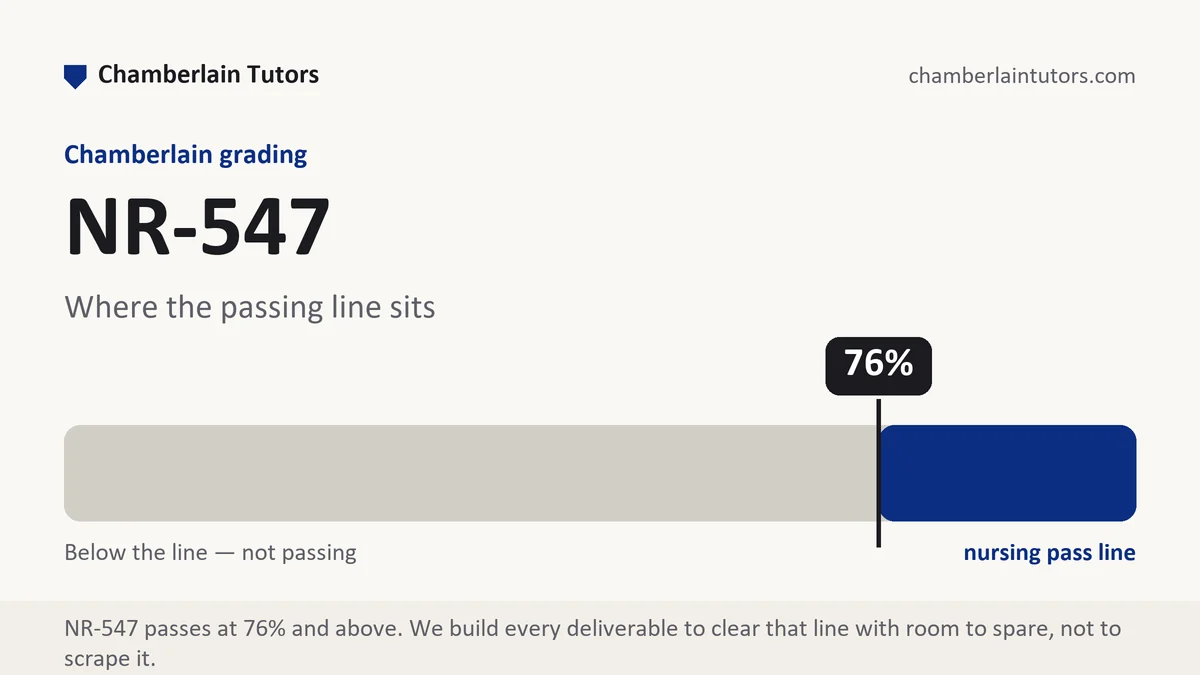
The stakes remain the specialty scale's: 84 to pass, no C band beneath it, and a practicum whose supervised hours run alongside the writing. The pediatric weeks are where thoroughness rows are easiest to win, because the added data sources give you more categories to visibly complete.
The NR-547 Week 5 method, step by step
Five moves that adapt the differential method to a client who is still developing.
-
Fix the developmental baseline first
Before judging any symptom, write what is expected at this exact age: attention span, mood regulation, fears, sleep. Every abnormality claim in the write-up will be measured against this paragraph, so build it from sources rather than intuition.
-
Attribute every finding to its informant
The child's report, the caregiver's account and the school's observations are three databases, and they routinely disagree. Keep each finding tagged to its source, because informant pattern is itself diagnostic data in pediatric work.
-
Demand the cross-setting test
A presentation that appears only at home or only at school points differently than one visible everywhere. For each candidate diagnosis, state what the setting pattern predicts and whether this client's pattern matches.
-
Run the shared-symptom ledger
Irritability, inattention and sleep disruption sit inside many pediatric candidates at once. For each shared symptom, write which candidate explains its timing and setting best rather than letting one symptom count for every diagnosis simultaneously.
-
Rank with development in the sentence
Each ranking justification should say not just which findings support the candidate but why they exceed developmental expectation. That clause is the week's distinctive skill, and its absence is the most common reason pediatric differentials lose the reasoning row.
A structure for the pediatric differential write-up
Planning guides from our desk for a write-up in the 900 to 1,100 word range, not Chamberlain requirements. Follow your rubric's weights where they differ.
| Section | What belongs in it | Suggested length |
|---|---|---|
| Presentation and developmental context | The concern as reported, alongside age, stage and what is developmentally expected. | 140-170 words |
| Findings by informant | Child report, caregiver account and school data, separately attributed, with agreements and conflicts noted. | 180-220 words |
| Setting pattern | Where the behaviors occur and do not, and what that distribution suggests. | 100-130 words |
| Candidate diagnoses | Each candidate with its anchoring findings, the developmental-excess argument, and its timeline fit. | 250-300 words |
| Ranking with developmental weighting | The order, justified by explanatory power measured against age norms. | 130-160 words |
| Next data and collateral | What you would gather next, from which informant or setting, and what it would change. | 100-130 words |
Evidence and citation craft for a pediatric week
Developmental norms are citable claims. The sentence saying what a given age can ordinarily regulate or sustain comes from developmental literature; source it, because it is the ruler every other sentence measures against.
Prefer pediatric validation for any instrument you mention. A screening tool normed in adults does not automatically speak for a twelve-year-old, and stating an instrument's validated age range alongside its result is exactly the precision this week grades.
Informant-agreement research earns its citation. If your write-up weighs a caregiver's account against a child's, the literature on how informants typically diverge lets you weigh with authority instead of preference.
Keep onset claims anchored to age windows. Some conditions require symptoms before a threshold age, and when your reasoning uses such a boundary, cite the criteria edition that draws it and give the client's timeline in years, not adjectives.
Five mistakes that cost points in a pediatric differential week
- Grading a child against adult norms. Calling ordinary seven-year-old behavior pathological is the signature pediatric error, and it tells the grader the baseline paragraph was never really built.
- Merging the informants. Writing the child is aggressive without saying who reports it flattens the disagreement that might be the most diagnostic fact in the case.
- Letting one symptom vote for every candidate. Irritability cannot simultaneously anchor four diagnoses at full weight. The shared-symptom ledger exists to stop exactly this double counting.
- Ignoring the setting distribution. A cross-setting requirement that goes unexamined leaves a criteria element visibly unaddressed, and pediatric rubrics tend to reserve explicit credit for it.
- Skipping school data. The classroom is the only setting with a built-in same-age comparison group. A write-up that never asks what school observes has left its best normative evidence unopened.
Before you submit the pediatric write-up
- A developmental baseline paragraph exists and is sourced
- Every finding carries its informant
- The setting pattern is stated and used in the ranking
- Each candidate's justification includes the exceeds-expectation clause
- Shared symptoms are allocated, not counted repeatedly
- Identifiers are stripped if the case comes from your practicum, per your course's rules
Pediatric case due this week?
Send the prompt, the rubric and the informant details from Canvas. A developmentally weighted differential comes back in 24 to 48 hours, floor-checked against the 84 line, first premium sample free.