NR-566, FNP pharmacology didactic in the MSN-FNP path, gets the same promise as every course we cover, with the Chamberlain-specific machinery this school's rules demand.
What NR-566 actually grades
The FNP track's pharmacology application course: prescribing decisions for primary care argued in writing, agent selection through monitoring, with the specialty scale underneath and clinical days often running alongside.
How we help in this course
We draft the prescriptions-in-prose the rubric wants, mechanism, alternatives, safety netting, and the session map keeps the writing clear of your placement days. Same 24 to 48 hours, same floor check.
Orders run the full machinery: rubric decoded, core-versus-supplemental tagged, a program-matched writer, rubric QA then a separate APA and originality pass, the scale check, delivery inside 24 to 48 hours.
How to start this course's case responses
Read the rubric for who before you read the prompt for what. Family-care pharmacology is graded on whether the plan changes when the patient changes, so the first thing to pull out of your scoring guide is the patient variable it is testing: an age at either end of the lifespan, pregnancy or lactation, a cultural or language factor, cost and coverage, or the legal boundary around a class of agents. Name that variable in one sentence at the top of your draft. From there the guide becomes an outline, a length for each part, and a final pass before you upload.
In NR-566 right now?
Send the week and the rubric from Canvas. First premium sample free, floor-checked, back in 24 to 48 hours.
Prescribing on paper while placement days run beside it
NR-566 lands its pharmacology writing in the same weeks many FNP students are logging clinical days, and that collision, not the content, is what usually breaks the course open. The desk's session map is built for it: every written deliverable is planned around your placement schedule at intake, drafted through the pipeline in 24 to 48 hours, and delivered ahead of the Mountain-Time cutoff so a long clinic day never turns into a midnight submission.
What a scope request should include for this course
Send three things in chat: the week's prompt and rubric, your clinical-day pattern for the session, and the gradebook if any scores have posted. The reply maps the writing calendar against the placement calendar, flags the heavy weeks in advance, and quotes delivery times that keep both tracks moving. Remember the ladder underneath: this is a specialty course, 84 is the last passing number, and the floor check runs on every draft. Placement fatigue is real; the arrangement exists so it never reaches the gradebook.
Do drafts argue agent selection or just describe it?
Argue it. Mechanism, alternatives considered, safety netting, monitoring assigned; the rubric pays for defended decisions, so that is what the writing does.
Is the first draft really free here too?
It is. One full prescribing-in-prose deliverable, premium standard, floor-checked, no charge, so the busiest students in the program can verify quality without spending a placement-week evening on doubt. The walkthrough is built to be read on a shift break, in minutes.
Find the variable the rubric is actually grading
Rows in this course tend to hide a condition inside a verb. A row that says apply, adapt or individualize is not asking for a correct drug; it is asking for a correct drug plus the reason it is correct for this person and would be wrong for someone else. Read every row twice, once for the task and once for the condition attached to it, and write the condition in the margin. Sections built without it come back with points missing and no obvious explanation.
Then set the budget. Suppose the week's case response is capped at 900 words and four rows carry 40, 30, 20 and 10 percent. The arithmetic gives 360 words, then 270, 180 and 90. Short deliverables punish preamble harder than long ones: a 90-word row is one tight paragraph rather than a section, and it still needs its citation. An introduction of 120 words in a 900-word response has spent the smallest row entirely on throat-clearing.
Do that subtraction before drafting, not after. Cutting a finished response down to weight is harder than writing to weight from the start, because by then every paragraph feels necessary to whoever wrote it.
The shape of a family-care prescribing response
Most graded writing here is a decision made for a named person and defended to someone who might reasonably disagree. These are the moves a grader looks for.
| Move | What it has to prove | What a weak version does |
|---|---|---|
| Who this patient is | Age, pregnancy or lactation status, relevant cultural or language factors, coverage and cost, all before any drug is named. | Opens with the condition and never describes the person. |
| The guideline you stand on | A named recommendation from a named body, with its year, and what it advises for a patient like this one. | Cites a textbook where a current guideline was expected. |
| First-line choice | Agent, regimen, and why it is the guideline-concordant answer here rather than merely a reasonable one. | A correct drug with a rationale that would fit any adult. |
| The lifespan adjustment | What changes because of age, pregnancy, weight or organ function, and exactly what you would do differently. | Naming the factor without acting on it. |
| Legal and ethical check | Scope and prescriptive authority, controlled-substance considerations where they apply, and what the patient agreed to. | Skipped as filler, which is where easy points go missing. |
| Access and cost | Whether this patient can obtain and continue the therapy, and the alternative if they cannot. | A plan that quietly assumes unlimited coverage. |
| Safety netting | The specific findings that should bring the patient back sooner, written in their words. | "Return if symptoms worsen." |
| Follow-up and endpoint | When you reassess, what you measure, and what result ends or changes the therapy. | No date, no measure, no stopping rule. |
Evidence craft when the source is a guideline
Name the body and the year. A recommendation with no issuing organization and no publication date is an opinion. Put both inside the sentence, and check that a newer version has not replaced yours.
Keep guidelines and trials in their own lanes. A guideline recommends; a trial demonstrates. When your claim is about what happens to patients, cite the study underneath the recommendation, not only the recommendation itself.
Trial details before the trial's result. When you reach past the guideline to the study underneath, give the design, the participant count and the comparison first. If the recommendation rests on weak evidence, say so plainly; naming a recommendation's strength raises your score rather than lowering it.
No incidence figure without its denominator and span. Write "roughly 3 of every 1,000 children in that age band each year" rather than a bare percentage, keeping denominator and period in the same breath as the number. Borrowed figures stripped of their base are the quiet, common error in lifespan writing. Verbs have lanes here too: guidelines recommend, trials reduce, observational work is associated with.
Above merely defensible
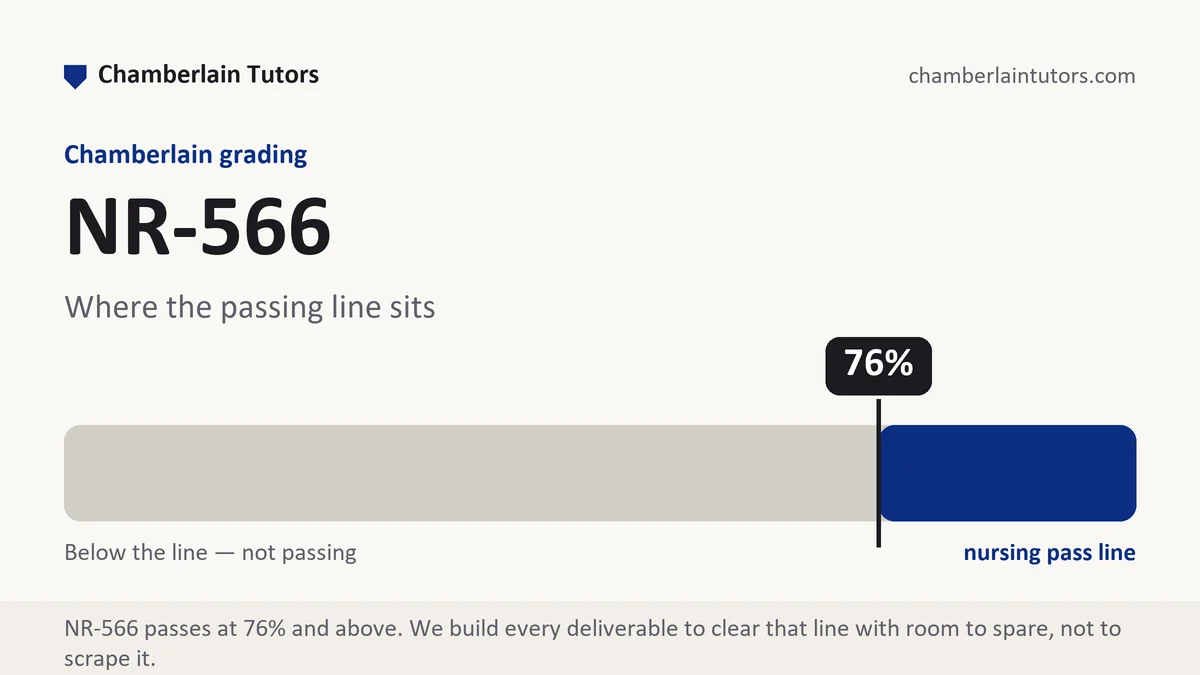
A passing response chooses a defensible drug and explains it. Because the specialty scale has no C and 84 is the last passing number, defensible is a narrow ledge: a session of adequate responses averages under the line, and nothing supplementary rescues an average the scored pieces have already fixed.
A strong response shows the decision moving. It states the plan, then shows what would change if the patient were pregnant, or eighty, or paying cash, and it commits to a follow-up date with a measurable endpoint. It also says out loud where the boundary of the role sits: what you would prescribe, what you would refer, what you would document. A family-care grader is reading for a clinician who knows both the patient in front of them and the limits around them both.
Six ways a family-care response loses points
- A generic adult plan for a lifespan prompt. If the scenario names an age extreme or a pregnancy, the rubric is grading the adjustment, not the drug.
- Ignoring cost and access when a row names them. Coverage is a clinical variable in this course, and treating it as background loses a whole row.
- Skipping the legal and ethical row. It often carries the least weight and the least effort, which makes it the cheapest points on the page.
- "Refer to a specialist" used as the plan. Referral is a step inside a plan. Say what you would do while the patient waits.
- Teaching written at clinician reading level. If the instruction would not survive being read aloud to the patient, it will not survive the row asking for education.
- No follow-up interval. A plan with no return date and no measure has not finished, and graders read a missing date as missing thinking.
Questions NR-566 students ask
The scenario mentions the patient's insurance. Does that belong in a pharmacology answer?
How do I handle the legal and ethical part without padding it?
My response keeps running over the word cap. What should I cut first?
The weeks, one by one
Week 1
NR-566 Week 1 lays the foundation the rest of the course prescribes on: how drugs move through and act on bodies that differ, because in family practice the bodies always differ. Read the full Week 1 manual.
Week 2
NR-566 Week 2, in our reading of the arc, takes up the frame around every prescription: what a family nurse practitioner may prescribe, under whose authority, with what controlled-substance rules, and what the patient must understand and the record must show. Read the full Week 2 manual.
Week 3
NR-566 Week 3, as we read the arc, opens the agent classes with the cardiovascular workhorses of family practice: blood pressure, lipids and the clot-prevention decisions that follow them. Read the full Week 3 manual.
Week 4
NR-566 Week 4, by our reading of the arc, moves to the airways: asthma and chronic obstructive disease, the two conditions family practice manages by stepping therapy up and down a published ladder. Read the full Week 4 manual.
Week 5
NR-566 Week 5, in our arc, belongs to the endocrine bread and butter of family practice: type 2 diabetes, thyroid replacement, and the hormonal therapy decisions that carry reproductive-age stakes. Read the full Week 5 manual.
Week 6
NR-566 Week 6, as we chart the arc, turns to infection: the acute prescribing decisions where family practice writes its fastest scripts and its most regretted ones. Read the full Week 6 manual.
Week 7
NR-566 Week 7, in our reading, brings the prescriptions that carry the heaviest counseling load: depression, anxiety, sleep and pain in the family-practice setting. Read the full Week 7 manual.
Week 8
NR-566 Week 8 gathers the whole course into one patient, or one household: the polypharmacy case, where every class you studied is on the same medication list and the graded act is subtraction as much as prescribing. Read the full Week 8 manual.
Where NR-566 sits in Chamberlain's programs
Open the exact program map for sequence, credit, and option context. The current student schedule and syllabus remain authoritative after transfer evaluation, electives, state rules, and approved plan changes.